Nature in Our Backyard: Ep. 3
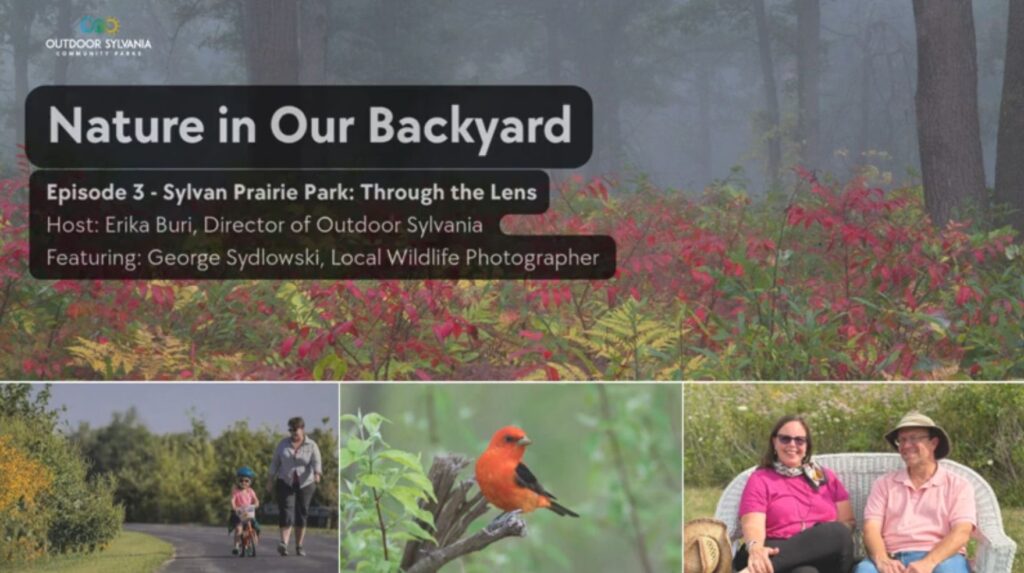
In Episode 3 of Nature in Our Backyard, Outdoor Sylvania Community Parks director Erika Buri sits down at Sylvan Prairie Park with birder and nature photographer George Sydlowski to talk about the digital tools birders use, the incredible wildlife that’s returned to this former farm field, and where to spot species like the Blue Grosbeak and Eastern Bluebird.
A hidden gem worth knowing about
- Sylvan Prairie Park is one of the district’s best-kept secrets — beloved by those who know it, undiscovered by many
- Remarkably accessible: you can step out of the parking lot and be surrounded by prairie within about 50 feet
- A fully paved three-mile loop trail, plus some mowed side trails to explore — welcoming to all ages and abilities
- Relatively flat, with gentle hills “if you want to be on a hill”
Birding by app: how eBird and iNaturalist open nature to everyone
- eBird (a global Cornell project) lets birders log and track sightings by location — and see what others have spotted, which helps newer birders confirm IDs
- iNaturalist works like “Google Lens that also records things” — snap a photo, and it helps identify the species and location, with the community weighing in
- Erika’s naturalist’s-eye perspective: these tools put in your pocket what once required carrying three field guides and a university expert
- How the parks staff rely on volunteer observations — since they’re in the office more than people imagine — to understand and share what lives in the parks
From farm field to thriving prairie: 15 years of transformation
- The prairie was planted on former farmland in 2009 — 40+ acres restored
- Today, roughly 150 bird species have been recorded at Sylvan Prairie over the past four years
- Why that matters: species diversity is a key indicator of habitat health, and the return of wildlife shows how much the restoration has improved the land
- A bonus: prairies are excellent at absorbing carbon (a topic for a future episode!)
What you’ll see out there: birds, insects, and George’s favorites
- Birdlife shifts with the seasons — summer brings singing indigo buntings, song sparrows, and common yellowthroat warblers; the mix changes as birds migrate for winter
- George’s most exciting sighting: a Blue Grosbeak among the coneflowers — a striking blue-and-yellow scene, and a rare treat for the area
- Bluebirds year-round, even in winter, near the water on the north trail
- The insect world too: George’s award-winning jumping spider photo (a past parks photo-contest winner) and how macro photography turned his fear of spiders into fascination
- Fall mornings bring spectacular spider webs, starting in September
George’s tip: a quick 15-minute route
- From the big loop, head west toward the water tower, take the trail that splits off north, and walk back — you’ll see plenty without doing the full three miles
- A little curve in the trail and some water features add variety
- Best time to visit: mornings for birds (when they’re most active); warmer parts of the day for butterflies; calm days over windy ones
Coming soon & plan your visit
- A new parking lot at the south end and a planned connection to the University Parks Trail (~2027) will make the park even easier to reach
- You don’t have to be a naturalist to make a difference — George’s story shows how anyone passionate about nature can contribute through volunteering and citizen science
- Sylvan Prairie Park | Outdoor Sylvania Community Parks